
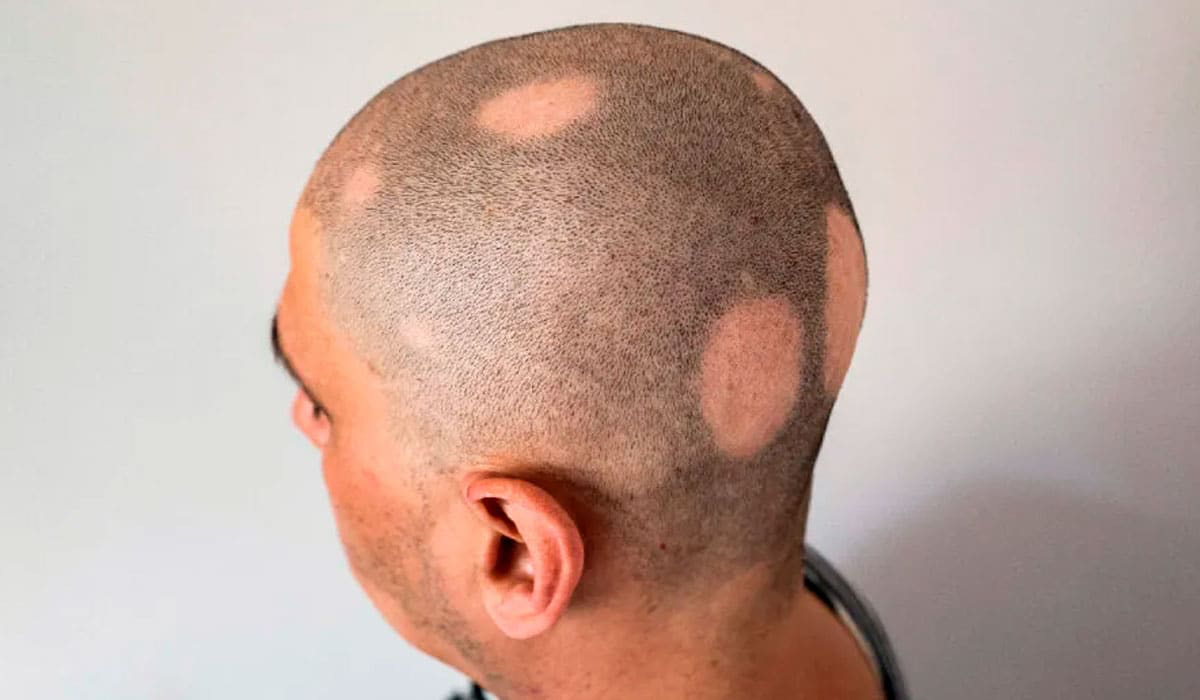
Alopecia areata is an autoimmune condition that causes sudden, patchy hair loss. If you’ve noticed bald spots on your scalp, eyebrows, beard, or body, you’re not alone. Alopecia areata affects millions of people worldwide and can be emotionally challenging, but it is treatable, and hair follicles often remain alive and capable of regrowth.
Understanding what triggers alopecia areata, how it progresses, and what treatments are available gives you more control over your journey.
What Alopecia Areata Really Is.
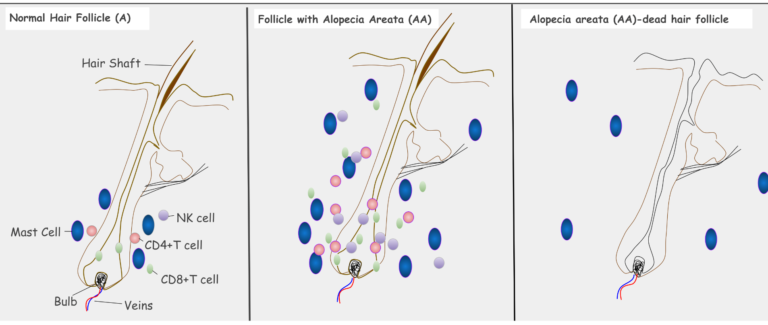
Alopecia areata occurs when your immune system mistakenly attacks your hair follicles, causing them to stop producing hair. Because the follicles are not permanently damaged, regrowth is possible—but the condition often behaves unpredictably, with cycles of loss and regrowth.
You can develop alopecia areata at any age. It is not caused by hair products, infections, or poor nutrition. It is an immune and genetic condition that can be triggered by inflammation, stress, and environmental factors.
Different Forms of Alopecia Areata:
Patchy Alopecia Areata: Sudden round or oval bald patches.
Alopecia Totalis: Complete loss of scalp hair.
Alopecia Universalis: Loss of scalp, eyebrow, eyelash, facial, and body hair.
Ophiasis Pattern: Hair loss along the sides and lower back of the scalp.
Diffuse Alopecia Areata: Rapid thinning across the whole scalp.
What Causes Alopecia Areata?
While the exact trigger varies from person to person, the main factors include:
Autoimmune activation: Your immune system targets hair follicles.
Genetics: Family history increases your risk.
Stress: Emotional or physical stress can trigger flare-ups.
Thyroid and hormonal conditions: Thyroid imbalance is common.
Allergies and atopic conditions: Eczema, asthma, or allergies may coexist.
Viral or environmental triggers: Illness or inflammation may initiate episodes.
Alopecia areata is not contagious and not caused by anything you did..
Common Symptoms to Watch For:
Sudden round bald patches,
Smooth, normal-feeling skin on hairless areas,
Tingling, itching, or mild burning before shedding,
Nail symptoms such as pitting, ridges, or brittleness.
Hair loss may start in one area and spread—or stop completely.
How Alopecia Areata Is Diagnosed?
A dermatologist may diagnose your condition through:
Visual examination,
Dermoscopy (scalp magnification),
Hair-pull test,
Blood tests (thyroid, vitamin D, autoimmune markers),
Scalp biopsy (rarely needed).
Diagnosis focuses on ruling out fungal infections, telogen effluvium, or androgenetic alopecia.
Alopecia Areata Treatment Options:
There is no single cure, but many effective treatments are available. Depending on the severity and pattern of your hair loss, a dermatologist may recommend one or a combination of therapies.
1. Corticosteroid Treatments:
These are often the first-line option.
Topical corticosteroids: Useful for small patches, especially in children.
Intralesional steroid injections: A highly effective option for adults with localized patches—often producing regrowth within 4–6 weeks.
Oral corticosteroids: Short courses may help rapid or extensive hair loss, but cannot be used long-term.
2. JAK Inhibitors (Janus Kinase Inhibitors).
A major breakthrough for severe alopecia areata.
Medications include baricitinib, ritlecitinib, and tofacitinib.
They work by blocking immune pathways that attack hair follicles.
Benefits:
Effective for alopecia totalis and alopecia universalis,
Encouraging long-term regrowth,
Suitable for chronic or severe cases,
These require medical supervision and regular monitoring.
3. Topical Immunotherapy.
Agents like diphencyprone (DPCP) or squaric acid stimulate a controlled allergic reaction to redirect the immune response.
Useful if you have extensive hair loss that doesn’t respond to other methods.
4. Minoxidil.
Topical minoxidil (2–5%) can boost regrowth and maintain hair cycle activity.
Commonly used as an adjuvant along with steroids or immunotherapy.
5. Light Therapy (Phototherapy).
Excimer laser or UV therapy may help some individuals, especially those with patchy hair loss.
6. Supportive & Lifestyle Strategies.
Stress Management
- Stress can trigger flare-ups. Practices such as meditation, yoga, exercise, counseling, or mindfulness can help reduce episodes.
Nutritional Support
No diet cures alopecia areata, but certain nutrients support follicle health:
- Vitamin D
- Zinc
- Iron
- Omega-3 fatty acids
Cosmetic & Practical Solutions
Many people use:
- Hair fibers
- Wigs and hairpieces
- Eyebrow microblading
- False eyelashes or magnetic lashes
These can greatly improve confidence during regrowth phases.
Living With Alopecia Areata
Alopecia areata can be emotionally overwhelming, but you are not alone, and the condition often improves with time and treatment.
Key reminders for you:
This is not your fault,
Hair follicles remain alive, even when bald,
Many effective treatments exist,
New therapies continue to emerge every year,
Support communities can make a huge difference.
What You Can Expect Long-Term
Alopecia areata is unpredictable. You may experience:
Full regrowth,
Cycles of shedding and regrowth,
More widespread involvement over time,
Stability for months or years.
Children and adults alike can experience complete recovery. Severe cases may require long-term management, but new treatments—especially JAK inhibitors—have dramatically improved outcomes.
Reliable Resources to Help You Learn More:
These trusted organizations offer patient-friendly support, scientific guidance, and community resources:
National Alopecia Areata Foundation (NAAF) – Education, support groups, clinical trial information.
American Academy of Dermatology (AAD) – Symptoms, diagnosis, and treatment guidance.
British Association of Dermatologists – Detailed patient leaflets on alopecia areata.