
Sun protection is especially important in India due to high UV exposure, tropical climate, humidity, and year-round sunlight. Indian skin tones, while naturally richer in melanin, are still highly susceptible to pigmentation, tanning, melasma, premature aging, and sun-induced skin damage.
This article explains everything you need to know about sunscreens for Indian skin, from the basics to correct usage, myths, and expert recommendations.
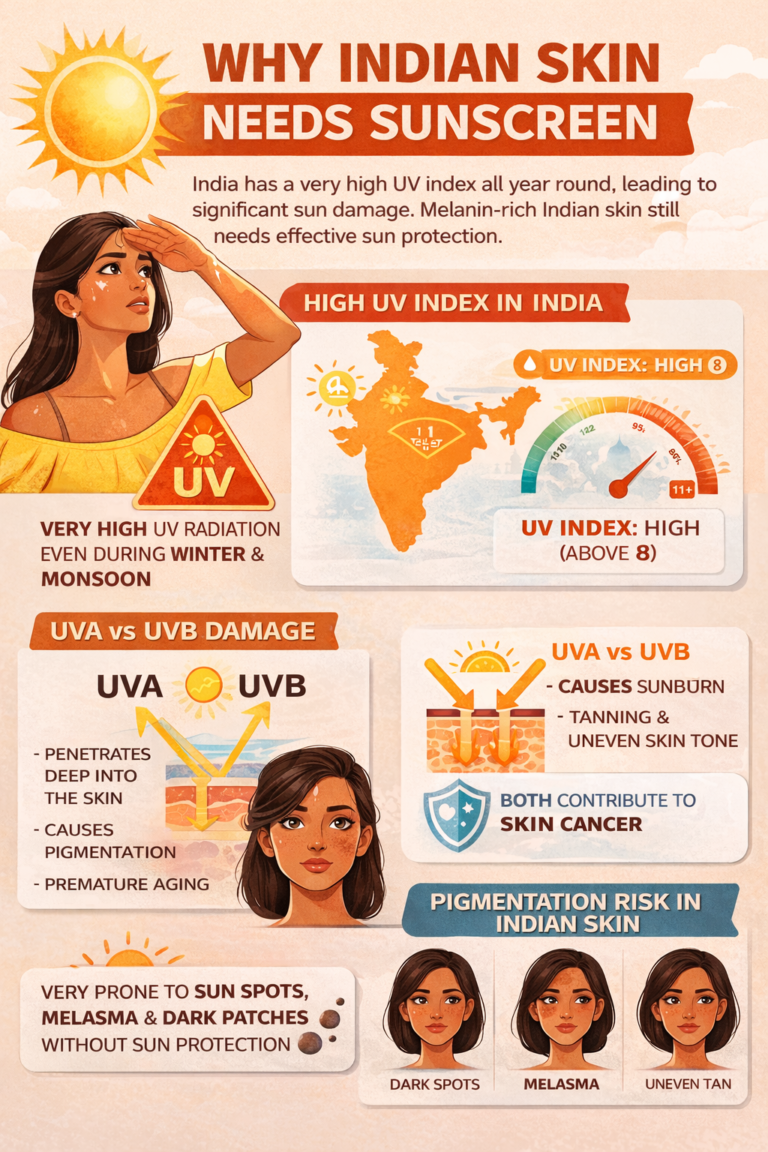
India receives high levels of UVA and UVB radiation throughout the year, even during monsoons and winter months. UVA rays penetrate deep into the skin and are a major cause of:
UVB rays cause sunburn and contribute to skin cancer risk.
Because UVA rays penetrate glass, sun exposure occurs even indoors, during driving, or while sitting near windows.
Yes. This is a common misconception.
Although Indian skin contains more melanin, which offers some natural protection, it is more prone to pigmentation and uneven tanning. Daily sunscreen use is essential for all Indian skin tones, regardless of age or gender.
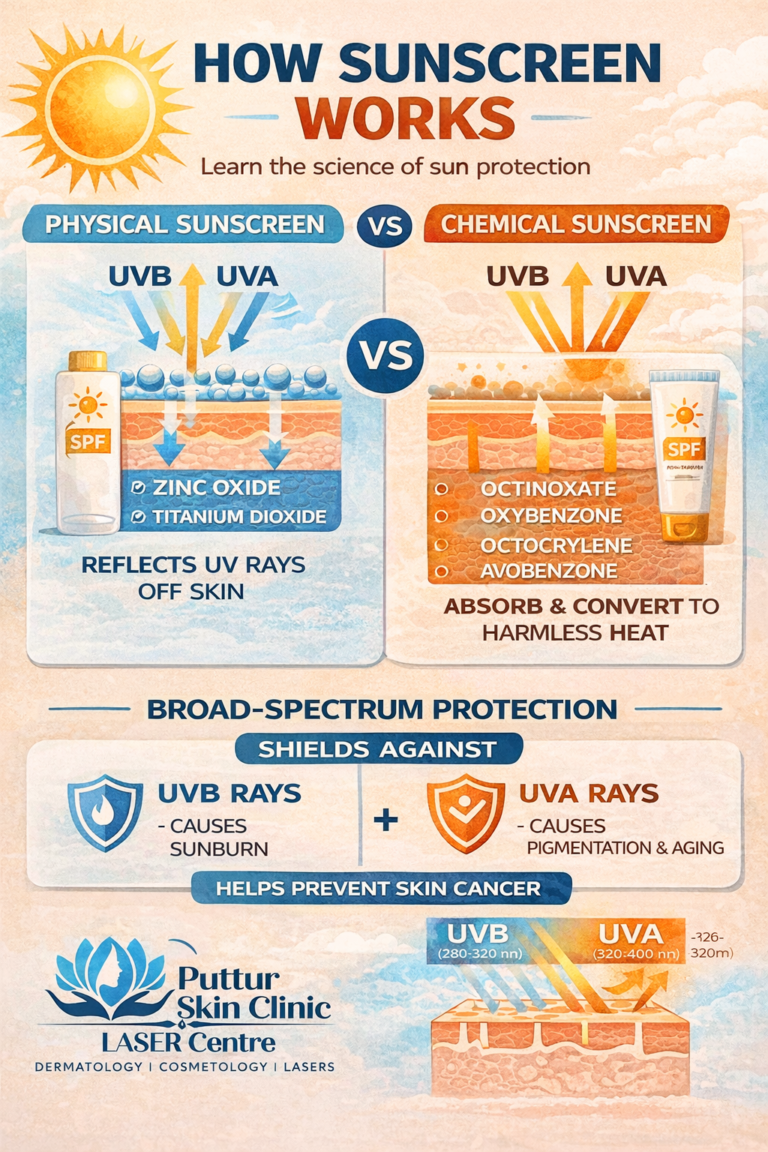
Always choose a sunscreen labeled “Broad Spectrum”, meaning it protects against both UVA and UVB rays.
Higher SPF is beneficial in India due to prolonged sun exposure.
Many modern Indian sunscreens use hybrid formulations with both physical and chemical agents,, for better protection and comfort.
Incorrect application is one of the most common reasons sunscreens fail.
In hot and humid Indian weather, reapplication is crucial!
UV rays are present even on cloudy days. Sunscreen is still necessary.
Sun exposure worsens acne marks. Sunscreen helps prevent dark spots and scarring.
After procedures like LASERs, chemical peels, or microneedling, sunscreen is mandatory
to prevent complications.
Yes. Sunscreens approved by regulatory authorities are safe for long-term daily use. Mineral sunscreens are often preferred for:
Regular sunscreen use has been proven to reduce skin aging and skin cancer risk.
For best protection, combine sunscreen with:
Yes. UVA rays penetrate glass and can cause pigmentation and aging indoors.
2. Is sunscreen necessary during winter or monsoon?
Yes. UV radiation is present throughout the year.
Yes! Consult your dermatologist, and choose a non-comedogenic sunscreen suitable for your skin type.
Usually not. Makeup does not provide sufficient quantity or coverage.
Yes. Sunscreens are recommended for children above 6 months of age. Mineral / physical sunscreens are preferred.
Absolutely. Dark skin is prone to pigmentation and uneven tanning.
For Indian skin and climate, sunscreen is not optional. It is a daily medical necessity, not just a cosmetic product. Correct sunscreen choice and consistent use protect against pigmentation, premature aging, and long-term skin damage.
A dermatologist can help you choose the most suitable sunscreen based on your skin type, lifestyle, and concerns.