Dark patches or uneven pigmentation on the face can be frustrating, particularly when they improve temporarily and then return.
One of the most common causes is melasma, a pigmentation disorder that typically appears as brown or grey-brown patches, often on areas such as the cheeks, forehead, nose and upper lip. But not every dark spot is melasma. Post-acne pigmentation, sun-induced pigmentation, freckles and other conditions can look similar.
This distinction is important because the treatment approach is different.
If you are searching for melasma trea tment in Puttur or looking for a dermatologist for facial pigmentation, the first step should be identifying the type and cause of pigmentation rather than immediately choosing a laser or cream.
Melasma is often chronic and can recur. Current dermatology guidance emphasises photoprotection, appropriate topical treatment and carefully selected additional procedures when required.
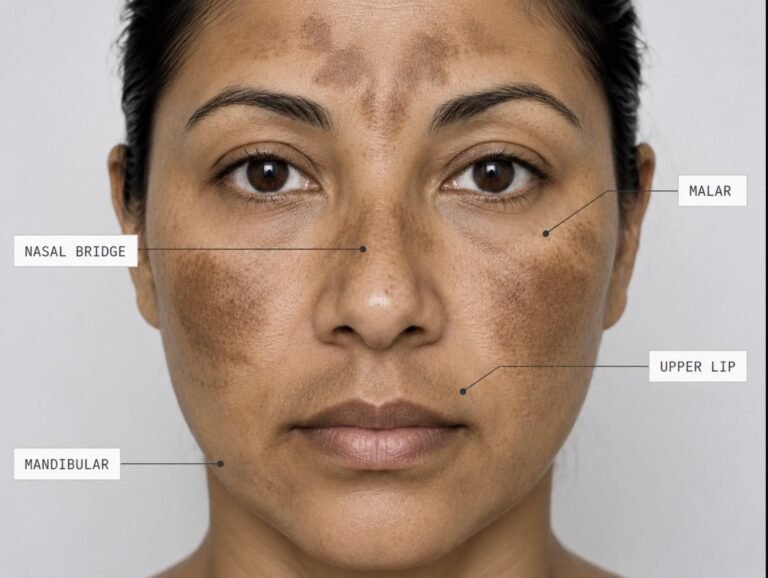
Melasma is a pigmentation disorder in which melanocytes—the cells responsible for producing skin pigment—become more active.
It commonly produces symmetrical brown or grey-brown patches on the face.
Melasma can be influenced by:
Melasma is not dangerous, but it can persist for years and may significantly affect a person’s confidence.
The condition can also fluctuate. Someone may notice that pigmentation becomes less visible during periods of strict sun protection and then becomes darker after increased exposure.
Not every dark patch is melasma.
Melasma: Usually appears as larger, irregular patches, often symmetrically distributed across the face.
Post-inflammatory hyperpigmentation: This can develop after inflammation or injury, including acne, eczema, burns or certain skin procedures.
Sun-induced pigmentation: Repeated ultraviolet exposure can contribute to various forms of pigmentation and dark spots.
Freckles: Freckles are usually small pigmented spots influenced by genetics and sun exposure.
Acne marks: After acne settles, brown or dark marks may remain even though the active acne has disappeared.
The distinction matters because treating the wrong condition can lead to disappointment or, in some circumstances, irritation that worsens pigmentation.
Sun exposure: Sunlight can stimulate pigment production and worsen existing pigmentation. For people prone to melasma, consistent photoprotection is one of the most important parts of treatment. We commonly recommend broad-spectrum sunscreen with SPF 50 or higher along with shade and protective clothing.
Hormonal changes: Melasma is often associated with hormonal changes, including pregnancy and certain hormonal medications (OCPs). However, melasma is not simply a “hormone problem.” Several factors can interact to produce and maintain the condition.
Visible light: Visible light can also worsen pigmentation, particularly in people with darker skin tones. Tinted sunscreens containing iron oxides may provide additional protection against visible light.
Skin irritation: Harsh skincare products that repeatedly irritate the skin may worsen darkening. If a product burns or stings every time you apply it, it may be irritating your skin rather than improving it.
One of the biggest misconceptions about melasma is that a single treatment can permanently remove it.
Melasma is often a chronic, relapsing condition.
Even after improvement, triggers such as sunlight and visible light can stimulate pigmentation again.
This is why treatment should not end when the patches become lighter.
A long-term maintenance strategy may include:
Recent dermatology guidance emphasises realistic expectations and long-term maintenance because melasma can relapse even after successful initial treatment.
A dermatologist usually diagnoses melasma based on the appearance and distribution of the pigmentation and the patient’s history.
A clinical examination can help distinguish melasma from other causes of pigmentation.
In uncertain cases, additional evaluation may be needed.
The important principle is:
Diagnosis comes before treatment.
A dark patch cannot be treated with a laser simply because it looks like pigmentation.
Finding your exact type of melasma helps doctors choose the right treatment.
There is no single treatment that works for every patient.
A dermatologist may combine different approaches depending on the depth and pattern of pigmentation, skin type, triggers and previous treatments.
Photoprotection is fundamental.
Look for a broad-spectrum sunscreen with SPF 50 or higher. If pigmentation or melasma is a concern, a tinted sunscreen containing iron oxide may offer additional protection against visible light.
Sunscreen should be used consistently rather than only on sunny holidays.
Other useful measures include:
Depending on the diagnosis, dermatologists may prescribe medicines that reduce excess pigmentation.
Examples can include hydroquinone, retinoids, azelaic acid and other pigment-modulating treatments.
These medicines are not suitable for everyone, and some require careful supervision.
Avoid using strong bleaching creams or steroid-containing combinations without medical advice.
Chemical peels can be considered for selected pigmentation problems.
The type, strength and frequency of the peel should be chosen according to the patient’s skin and diagnosis.
Certain laser systems may have a role in selected pigmentation disorders.
However, laser treatment is not automatically the best treatment for melasma.
Melasma can sometimes recur or worsen after inappropriate treatment, particularly when the underlying triggers and photoprotection are not addressed.
Whether laser treatment is appropriate should therefore be determined after a dermatologist examines the pigmentation.
Many patients benefit from a combination of:
This approach can be more useful than relying on one procedure alone.
Laser procedures are completely safe in darker skin types.
Before starting any Laser treatment, your dermatologist will consider:
Our facility, Puttur Skin Clinic, utilizes a sophisticated German-engineered Q-switched Nd:YAG laser system designed to address pigmentation and various dermatological concerns with a focus on safety and precision.
For melasma and dark spots, sunscreen should be part of your daily routine.
AAD guidance recommends broad-spectrum, water-resistant SPF 50 or higher and reapplication approximately every two to three hours when outdoors, or sooner after swimming or sweating.
Tinted sunscreen containing iron oxide can help protect against visible light, which can contribute to pigmentation.
More exfoliation is not necessarily better. Avoid repeatedly irritating your skin with harsh scrubs, aggressive acids, home remedies or products that cause burning.
Exercise caution regarding products promising rapid skin whitening, as these often contain undisclosed or inappropriate ingredients. Certain unregulated formulations may include potent steroids or heavy metals, which can lead to significant long-term complications affecting both the skin and internal health, including renal function.
A dermatologist can help you choose a safer treatment plan based on your skin and the actual cause of pigmentation.
Melasma usually develops through a combination of factors rather than one single cause. Sun exposure, hormonal influences, genetics and other triggers can contribute.
Melasma can often be improved, but it may recur. Long-term photoprotection and maintenance treatment may be necessary.
Sun exposure, visible light, hormonal factors and other triggers can reactivate pigmentation. Stopping maintenance measures can also allow pigmentation to return.
Yes. Sun protection is a foundational part of melasma management and can help prevent worsening and recurrence.
Look for a broad-spectrum sunscreen with SPF 50 or higher. For melasma and heavy pigmentation, a tinted sunscreen containing iron oxide is highly recommended. This ingredient blocks visible light, which can also worsen dark spots. It is always best to use a dermatologist-recommended sunscreen tailored specifically to your unique skin type.
Chemical peels may help selected pigmentation problems, but the appropriate peel depends on the diagnosis and your skin type.
Improvement usually takes time. The duration depends on the severity, depth, triggers and treatment plan.
Yes. Post-inflammatory pigmentation after acne can often improve with appropriate skincare, sun protection and dermatologist-guided treatment.
Home remedies are not a reliable treatment for diagnosed melasma or significant pigmentation. Some acidic or irritating ingredients can actually cause inflammation and worsen pigmentation.
This article is for educational purposes only and does not replace an examination by a qualified dermatologist. Pigmentation can have different causes, and treatment should be selected according to the diagnosis, skin type and individual circumstances. Prescription medicines, chemical peels and laser procedures should be undertaken only under appropriate medical supervision.
If persistent facial pigmentation is affecting your confidence, consider getting the condition properly diagnosed rather than repeatedly trying different creams or procedures.
Book a consultation at Puttur Skin Clinic in Bolwar, Puttur, for a personalised assessment of melasma, pigmentation or acne marks.