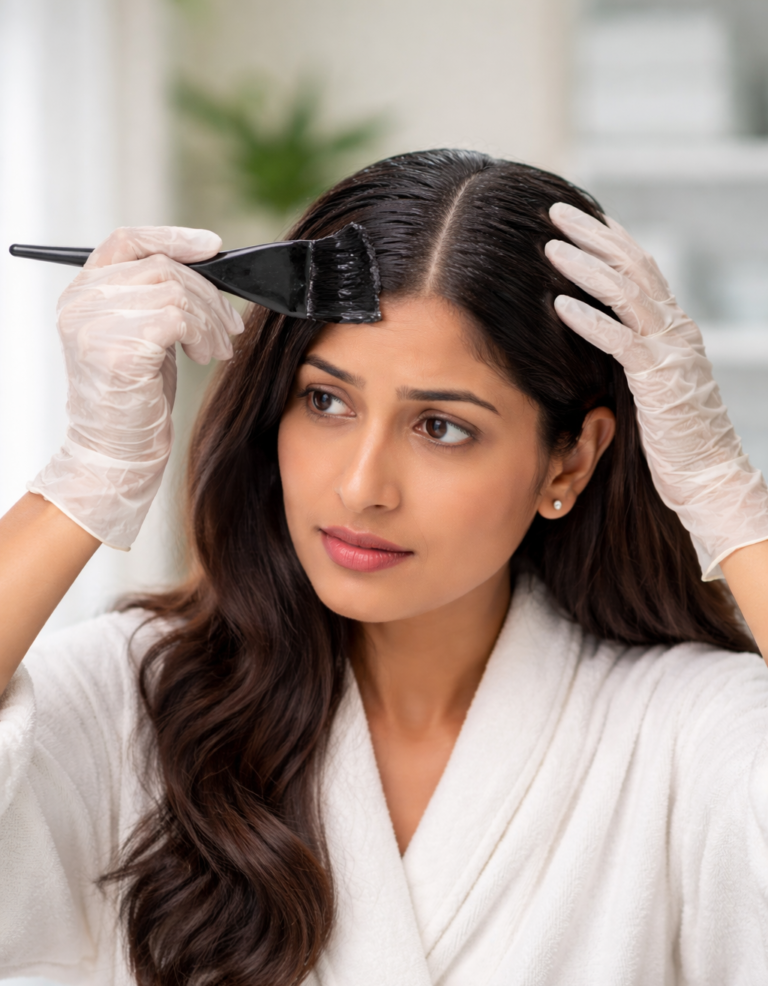
Hair dye is one of the most commonly used cosmetic products today. While it helps cover grey hair and improve appearance, many people are unaware that hair dyes contain strong chemicals that can trigger allergies, pigmentation disorders, and long-term skin complications.
Some reactions are mild, but others can cause persistent pigmentation, chronic skin disease, and severe allergic swelling. Understanding these risks can help you protect your skin and seek early treatment.
Most permanent hair dyes contain a combination of chemicals that help change hair color.
The most important ones include:
PPD is the most common cause of hair dye allergy.
It can cause:
PPD sensitivity can develop suddenly, even after years of safe use.
Ammonia opens the hair shaft for dye penetration.
Side effects include burning sensation, scalp irritation, hair dryness & hair weakening.
Used as a bleaching agent.
Effects include hair damage, hair breakage, dry scalp & hair thinning.
These chemicals can trigger allergic skin reactions and pigmentation changes.
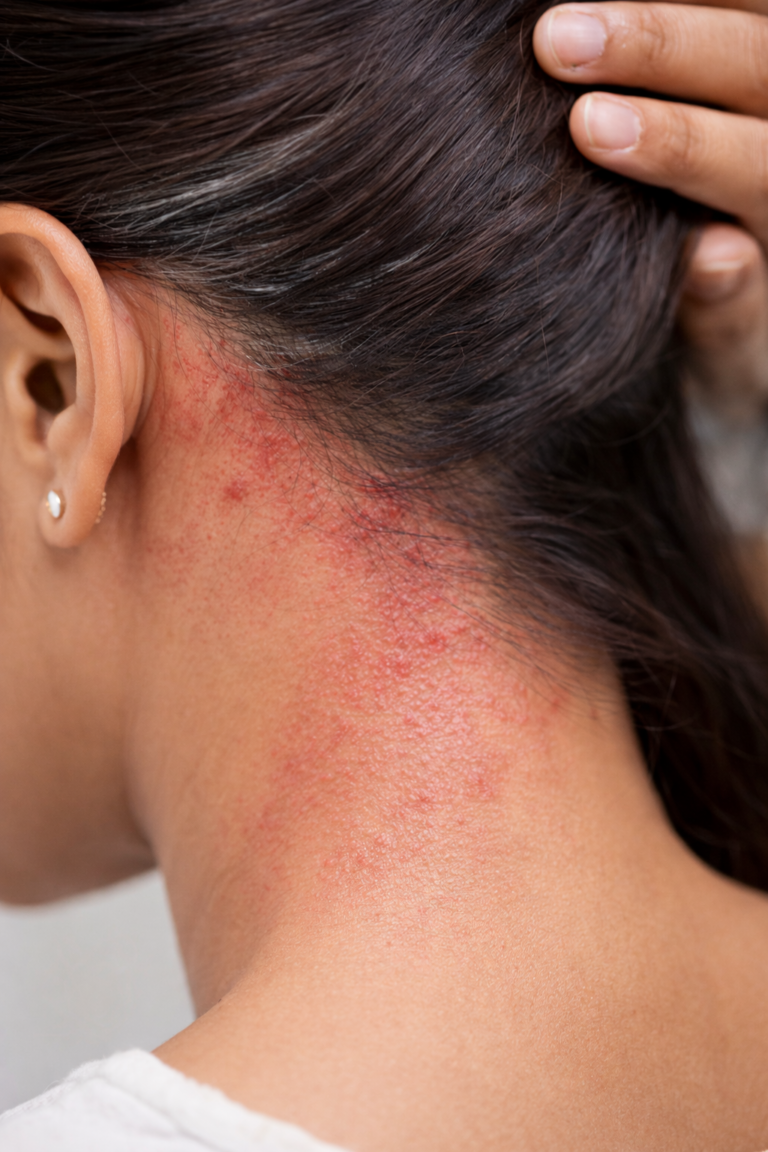
Hair dye reactions can affect both the scalp and surrounding skin.
This is the most common complication.
Symptoms include:
Itching scalp,
Rash around hairline,
Redness and irritation,
Burning sensation.
This may spread to the forehead, ears, and neck.
Some people develop sudden allergic hives after hair dye use.
Symptoms include:
Raised itchy swellings,
Red patches,
Sudden itching.
This may occur within hours of dye application.
This is a more serious condition.
Symptoms include:
Swelling of eyelids,
Lip swelling,
Facial swelling.
This requires urgent medical attention.
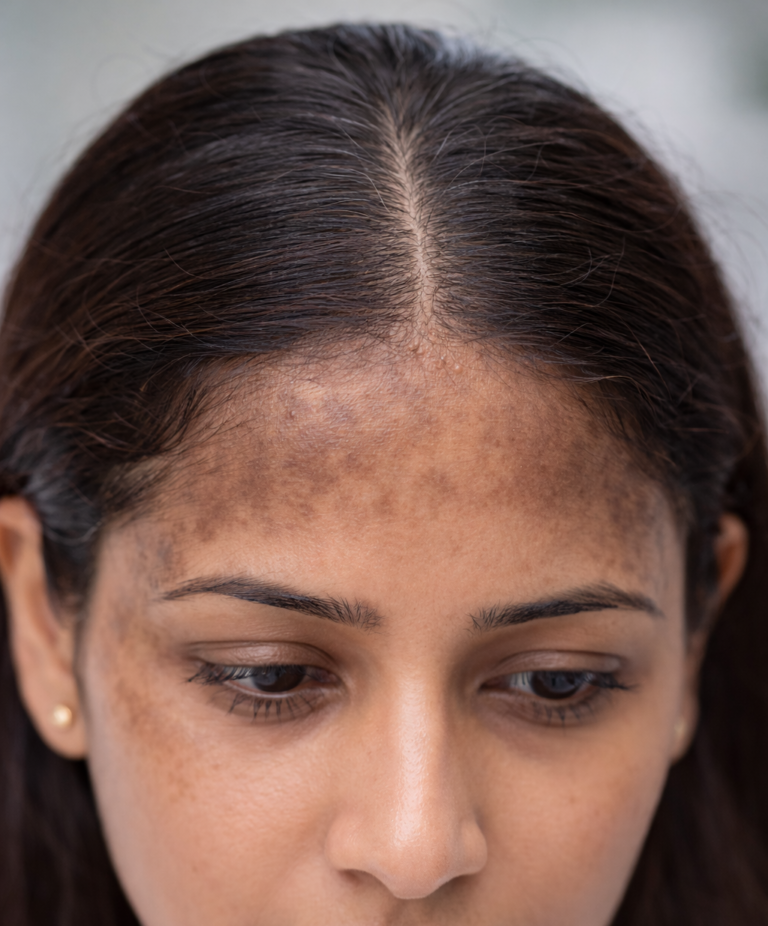
This is a chronic pigmentation disorder caused by repeated hair dye exposure.
Features include:
Dark brown or grey pigmentation,
Commonly affects forehead and temples,
Gradual onset,
Difficult to treat if prolonged.
Hair dye chemicals are a major trigger.
This is a chronic pigmentation condition seen in many hair dye users.
Features include:
Dark patches on face and neck,
Slowly progressive pigmentation,
Long-term skin sensitivity.
Early diagnosis improves treatment outcomes.
Frequent dye use damages hair structure and cause sudden hair fall, hair thinning. It can also cause dry brittle hair.
You may be at higher risk if you:
Use hair dye frequently,
Have sensitive skin,
Have history of allergies,
Have eczema or dermatitis,
Use low-quality dyes.
Follow these simple precautions:
Always do a patch test before use.
Avoid frequent dye application.
Use safer, dermatologist-recommended products.
Avoid dye use if scalp is irritated.
Consult a dermatologist if any reaction occurs.
Consult a dermatologist if you notice:
Persistent itching or rash,
Facial pigmentation after hair dye,
Swelling or allergic reaction,
Hair loss after dye use.
Early treatment prevents permanent complications.
Hair dyes contain strong chemicals that can cause allergic reactions, urticaria, pigmentation disorders like Riehl’s melanosis and lichen planus pigmentosus, and hair damage. While hair dye is generally safe when used properly, repeated exposure increases the risk of complications.
If you experience any unusual symptoms after hair dye use, consult a qualified dermatologist for proper diagnosis and treatment.