

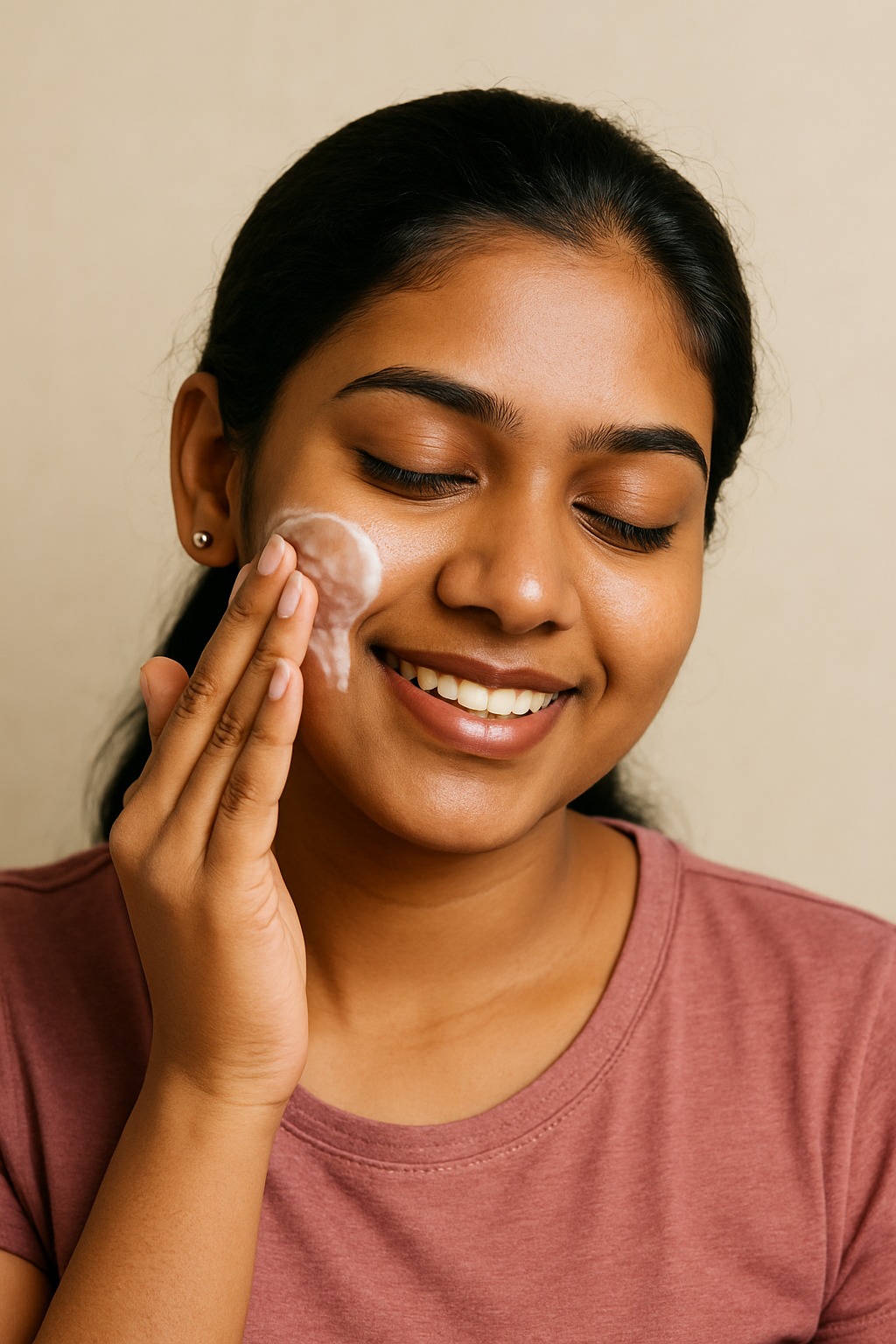
Why Your Skin Gets Dry in Winter?
Winter brings low humidity, cold winds, and hotter showers — all of which weaken the skin’s moisture barrier. Scientific research shows that cold and dry air increase transepidermal water loss (TEWL), meaning your skin loses moisture faster than it can replace it. This leads to:
- Tightness,
- Rough texture,
- Flaking,
- Itching,
- Increased sensitivity.
Indian skin, which is naturally more prone to pigmentation and sensitivity, often reacts faster to these environmental changes.
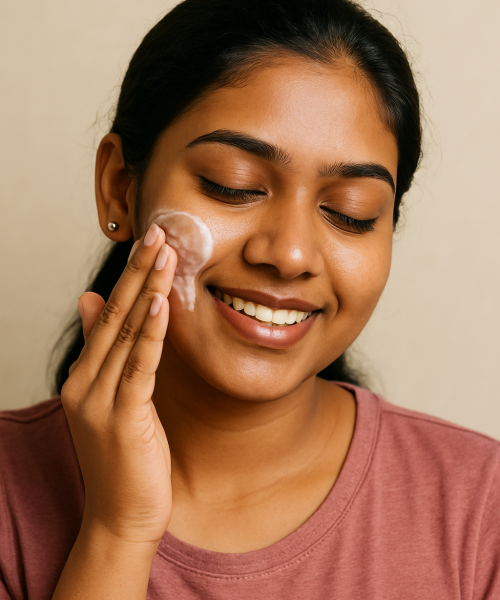
Ceramides: The Essential Lipids Your Skin Needs
Ceramides are natural fats that make up nearly 50% of the skin’s protective barrier. In winter, ceramide levels drop, disrupting barrier function.
Benefits of natural ceramides:
- Restore the skin barrier.
- Reduce dryness and roughness.
- Improve hydration long-term.
- Calm irritation and redness.
How to use them?
Look for moisturizers labeled “contains ceramides,” “ceramide complex,” or “barrier repair.” Creams (not lotions) work best for winter.
Ideal for: dry skin, eczema-prone skin, sensitive skin, or anyone noticing tightness.
Hyaluronic Acid: A Hydration Magnet!
Hyaluronic acid (HA) is a humectant — it pulls water, from the environment, into the skin. Clinical studies show HA improves hydration and smoothness, (especially in low-molecular- weight forms).
Benefits of natural HA:
- Instantly plumps dehydrated skin.
- Enhances the effect of moisturizers.
- Works for all skin types, including oily and acne-prone.
How to use it correctly?
Apply HA on slightly damp skin, then seal it with a ceramide moisturizer. This prevents HA from pulling moisture out of the skin when air is very dry.
A Simple Winter Skin Routine: (Dermatologist-Approved)
Morning:
- Gentle cleanser (cream or hydrating type).
- Ceramide-rich moisturizer.
- Sunscreen SPF 30–50 (yes, even in winter!).
Night:
- Cleanse with a mild, non-foaming cleanser.
- Apply treatment (retinoid/azelaic acid — only if prescribed by your Dermatologist)
- Seal with a thicker ceramide cream.
Extra Tips to Prevent Winter Dryness
- Avoid long, hot showers — they strip essential skin oils.
- Use a humidifier if indoor air feels very dry.
- Switch to cream cleansers instead of gel cleansers.
- Avoid exfoliation.
- Pat skin dry and moisturize within 3 minutes to trap water.
- Wear soft, breathable fabrics (avoid wool directly on skin).
Winter Care for the Body
- Use a thick body cream (shea butter/ceramide-based).
- Apply moisturizer right after bathing.
- For cracked heels or elbows, use occlusive ointments at night and cover with cotton socks or gloves.
When to See a Dermatologist
Seek professional help if you experience:
- Persistent itching.
- Red, inflamed patches.
- Cracks that bleed.
- Recurrent eczema flare-ups.
A dermatologist can advise on prescription creams, barrier-repair treatments, or personalized winter routines.
Bottom Line
Beating winter dryness isn’t complicated — it’s about strengthening your skin barrier and boosting hydration. Ceramides rebuild the protective layer, hyaluronic acid restores moisture, and simple daily habits prevent your skin from drying out.
With the right approach, your skin can stay soft, healthy, and glowing throughout winter.