
Minoxidil is one of the most researched and effective treatments for hair loss—but only when used correctly and consistently. Many people apply it incorrectly, stop during the shedding phase, or mix it with products that reduce absorption, which leads to poor results.
This guide explains how to use minoxidil properly, the best time to apply it, how to combine it with hair oil safely, what results to expect, and common mistakes to avoid.
Minoxidil is an FDA-approved topical treatment for hair thinning and pattern hair loss in both men and women. It works by:
Improving blood flow to hair follicles.
Extending the hair growth (anagen) phase.
Reviving weakened or miniaturized follicles.
It is most effective for thinning at the crown and top of the scalp and helps slow hair loss while promoting regrowth.
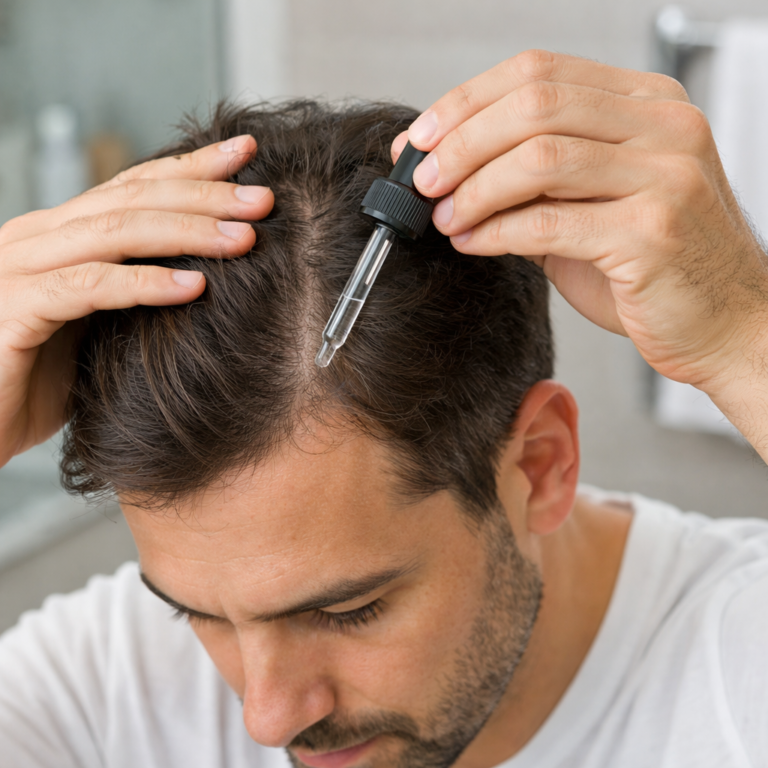
Wash your hair with a mild shampoo.
Dry your hair and scalp thoroughly before application.
Applying minoxidil on a wet or damp scalp can reduce absorption.
Using more product does not speed up hair growth.
Liquid: 1 ml per application:
Dropper: Fill to the 1 ml mark
Foam: Half a capful.
Apply only to thinning or affected areas.
Use clean fingertips.
Massage lightly for 10–20 seconds.
Avoid aggressive rubbing.
Wash your hands after application.
Allow 2–4 hours before washing, sweating, or lying down
Avoid hats or pillows until fully dry
Timing plays an important role in absorption and effectiveness.
Apply at least 1 hour before going out.
Allows proper drying and absorption.
Prevents sweat from washing it away.
Apply 2–3 hours before sleeping.
Prevents transfer to pillows.
Ensures maximum scalp contact.
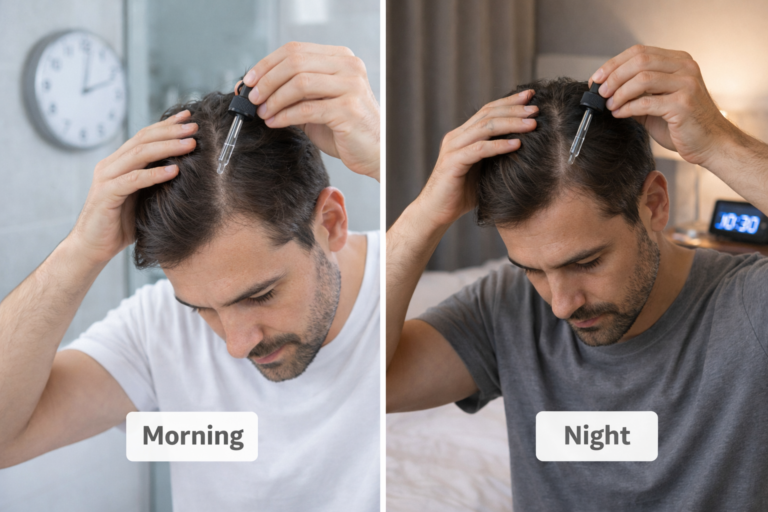
If using once daily, choose a time you can stick to every single day.
Hair oil can block minoxidil absorption if used incorrectly. Follow these rules:
Wait at least 4 hours after applying minoxidil before using hair oil.
If oil is already applied, wash it off before your next minoxidil dose.
Best method:
Apply oil 1 hour before showering,
Wash hair,
Apply minoxidil on a clean, dry scalp.
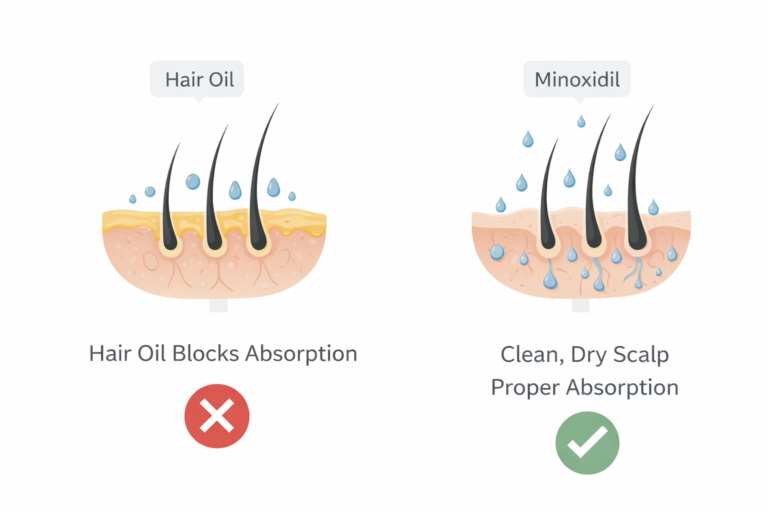
Never apply oil immediately before or after minoxidil.
Men: 5% minoxidil once or twice daily.
Women:
5% once daily (most common).
2% twice daily (alternative).
Consistency matters more than frequency.
Weeks 2–4: Increased shedding (normal and temporary).
4–12 weeks: Baby hair regrowth may begin.
3–4 months: Reduced hair fall.
6 months: Visible thickening.
12 months: Maximum results.
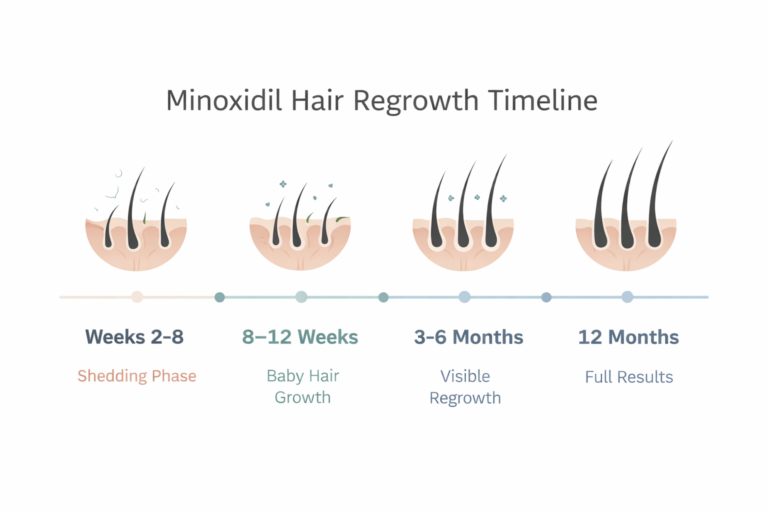
Stopping minoxidil will cause newly grown hair to shed again.
Use a mild, gentle shampoo.
Avoid harsh ingredients like:
Sulfates.
Parabens.
Phthalates.
Wash hair 2–3 times per week.
Keep scalp clean to improve absorption
Healthy scalp = better results.
Skipping applications,
Using more than recommended,
Applying on wet scalp,
Stopping during shedding phase,
Mixing with oil incorrectly,
Expecting overnight results.
Scalp dryness or itching,
Mild flaking,
Temporary shedding,
Rare: dizziness or palpitations.
If side effects persist, consult a healthcare professional. Its always best to consult a Dermatologist before starting minoxidil.
No. Stopping minoxidil will reverse gains within a few months.
Yes. Shedding means old weak hairs are being pushed out for new healthy hair growth.
No. Inconsistent use reduces effectiveness.
It works best on thinning areas, not completely bald patches.
Only if the oil has been washed off and the scalp is dry.
Yes, once it has fully dried.
Yes, when used as directed.
Yes, once daily application is commonly recommended.
It is used off-label; results vary and dryness is common.
Missing one day occasionally is fine, but frequent gaps reduce results.
Minoxidil is a proven hair loss treatment, but success depends on correct application, proper timing, and long-term consistency. Follow the right routine, be patient through the shedding phase, and avoid habits that block absorption.
Used properly, minoxidil can significantly slow hair loss and promote visible regrowth.