
Busting common Indian skincare myths — why harsh scrubs, over-using actives, and DIY masks can harm your skin, with dermatologist-backed, science-referenced guidance and practical routines to protect the skin barrier.
Many popular skincare “shortcuts” — aggressive scrubbing, layering multiple chemical actives, or frequent DIY masks (turmeric, lemon, yoghurt) — can damage the skin barrier, cause irritation, pigmentation or allergic reactions, and make conditions like acne, eczema or sensitivity worse.
The safe approach: Keep it simple! Protect the barrier first (gentle cleansing, moisturizers, sun protection), introduce actives slowly and one at a time, and treat DIY recipes cautiously.
Myth 1 — “Hard scrubs and vigorous exfoliation make skin clearer and healthier”
Reality: Over-mechanical exfoliation (coffee/sugar scrubs, rough brushes) and overly frequent chemical exfoliation damage the stratum corneum (the outer skin layer), increase transepidermal water loss (TEWL), and can create tiny tears that lead to redness, irritation and even post-inflammatory hyperpigmentation — especially on darker/Indian skin types.
Dermatologist-backed advice:
● Avoid exfoliation completely!
● Avoid abrasive scrubs on active acne, eczema, rosacea, or freshly treated (laser/peel) skin.
● Because your skin renews itself naturally, extra exfoliation is rarely necessary and often harmful.
● Prioritise a humectant + ceramide moisturizer to restore hydration and lipids.
Myth 2 — “If a little product is good, more is better” (overuse/over-layering of actives)
Reality: Piling on actives (retinoids + strong AHAs/BHAs + high strength vitamin C + benzoyl peroxide), or using high-concentration retinoids daily from the start, increases irritation, peeling, and “retinoid burn” — which can trigger flares, pigment changes and permanent skin damage.
Dermatologist-backed advice:
● Introduce one active ingredient at a time. Start low-frequency (eg. retinoid 2 nights/week) and increase as tolerated.
● Use buffering techniques: apply moisturizer first or mix a pea-size retinoid dose into moisturizer to reduce irritation. Modern formulations (encapsulated retinoids, micro- emulsions) also lower irritation.
● Don’t combine potent actives in the same routine (eg. high-strength AHA + retinoid same night) unless advised by a dermatologist.
● If irritation appears (redness, stinging, persistent flaking), reduce frequency or pause and rebuild skin barrier with a good moisturizer.
Myth 3 — “DIY masks (turmeric, lemon, raw milk/curd) are always safe, because they are natural!”
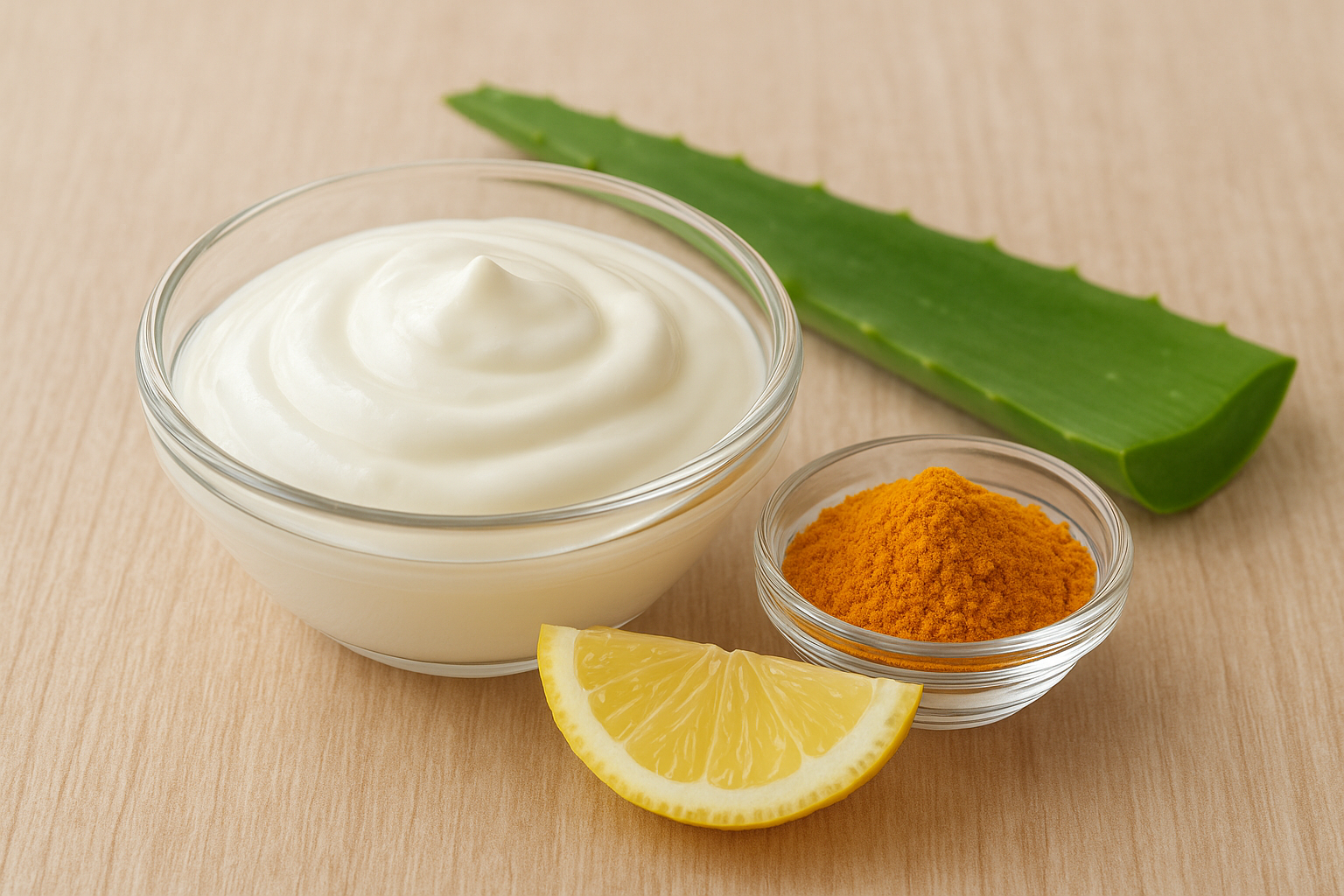
Reality: “Natural” ≠ safe. Ingredients commonly used in DIY masks can cause irritation, allergic contact dermatitis, staining or photosensitivity:
- Turmeric can cause contact dermatitis or persistent yellow staining; repeated use may dry or irritate some skins.
- Lemon/citrus (fresh juice) is acidic and photosensitising — can cause burns, pain and post-inflammatory hyperpigmentation when exposed to sunlight.
- Raw milk/curd contain lactic acid (a mild AHA) which may irritate sensitive skin, and raw ingredients can harbour microbes.Dermatologist-backed advice:
- Patch test: put any DIY mix on the inside forearm for 48 hours before using on the face.
- Never use citrus juices as topical brighteners; use professionally formulated, pH- balanced Vitamin C serums instead. Ask your dermatologist if you might require Vitamin C or not.
- If you want turmeric’s antioxidant benefits, prefer cosmetic formulations with standardized dosages (safer dose, less staining) or consult a dermatologist.
- For gentle at-home options, use masked products designed for face application (clinically tested) rather than raw kitchen ingredients.
Myth 4 — “Expensive products are always more effective!”
Reality:
Price often reflects marketing, packaging, and brand reputation—not necessarily higher concentrations of actives or better clinical results. A well-formulated product containing one effective active at the right concentration and with a proper delivery system can outperform an expensive product packed with multiple actives that aren’t optimally formulated.
Dermatologist-backed advice:
- Focus on the ingredient list, not the price tag. Look for proven actives such as niacinamide, ceramides, glycerin, hyaluronic acid, and retinoids (at clearly stated concentrations).
- Your dermatologist understands which formulations, brands, and manufacturers consistently deliver quality and results, based on clinical experience—not marketing claims.
Myth 5 — “Sunscreen isn’t needed in winter or on cloudy days”
Reality: UV radiation (both UVA and UVB) penetrates clouds and windows and contributes to pigmentation, photo-aging and skin cancer risk year-round. Skipping sunscreen leads to cumulative photodamage. Indian skin types are particularly susceptible to hyperpigmentation, so daily broad-spectrum SPF is important.
Dermatologist-backed advice
- Use a broad-spectrum SPF 30+ every morning (reapply when outdoors >2 hours).
- Choose cosmetically acceptable formulas (gel for oily, cream for dry) to encourage consistent use.
How to build a safe, effective routine:
- Cleanse gently with a pH-balanced, non-foaming or cream cleanser.
- Treat only when stable: introduce actives one at a time; wait 3–6 weeks to judge tolerance. Use lower concentrations initially.
- Moisturize to repair — use ceramide-containing creams or barrier-repair formulations as your staple moisturizer. Clinical trials show ceramide creams reduce dryness and improve barrier metrics (TEWL, hydration).
- Sunscreen daily.
- Avoid physical scrubs and strong chemical exfoliants.
- Avoid DIY acids and irritating home ingredients (fresh lemon, undiluted alcohol, baking soda) on the face.
Common patient questions:
Q: Can I use a homemade turmeric + yoghurt mask twice a week?
A: Not unless you’ve patch-tested and seen no irritation. Turmeric can cause staining and allergic reactions; yoghurt’s lactic acid may irritate sensitive skin. Prefer clinically formulated products for repeated use.
Q: I’m starting retinol — should I stop everything else?
A: Pause other irritants (strong AHA/BHAs, high-concentration vitamin C, benzoyl peroxide) during initiation. Start retinol low frequency and build up. Use moisturizers to buffer.
Q: My hands are dry from frequent washing — should I exfoliate?
A: No — focus on emollient creams with ceramides and occlusives (petrolatum, mineral oil) and reduce abrasive scrubs. Apply moisturizer immediately after washing.
References:
- Draelos ZD et al. — Effect of a ceramide-containing product on stratum corneum lipids and dry skin measures.(Randomized/clinical). Shows ceramide creams improve barrier function and hydration. (PubMed)
- Nugroho WT et al. — Randomized clinical trial comparing ceramide vs lanolin vs urea creams. Supports ceramide efficacy for barrier repair. (PMC)
- Narsa AC et al. — Comprehensive review: formulation strategies to reduce topical retinoid irritation. Explains introduction strategies, buffered formulations and ways to reduce retinoid-related irritation. (PMC)
- Medical News Today — Turmeric face masks: benefits and side effects. Practical review of topical turmeric risks including contact dermatitis and staining. (Medical News Today)
- Akiyama F. et al. / MDPI — Correlations between skin parameters in winter and environmental factors. Discusses TEWL, scaliness and how environmental stressors and exfoliation relate to skin condition in winter — relevant to understanding how.