
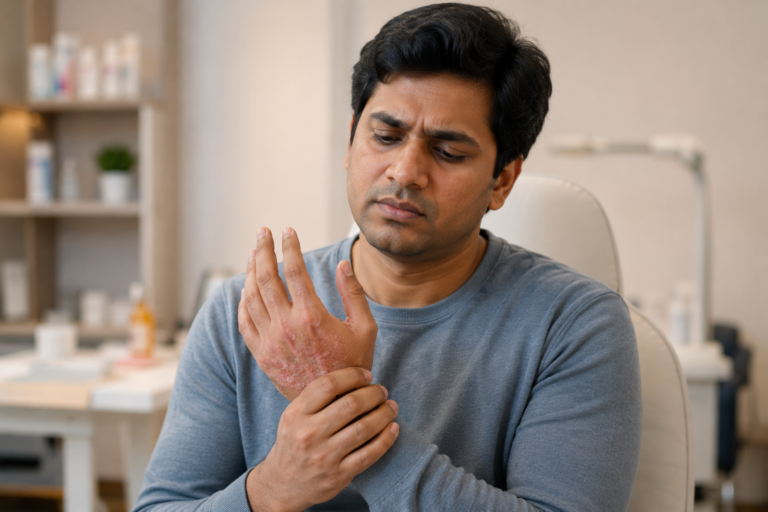
Most people know psoriasis as a skin disease that causes red, scaly patches. What many don’t realize is that psoriasis can also affect the joints.
This condition is called psoriatic arthritis (PsA), an inflammatory disease that causes joint pain, stiffness, and swelling. If left untreated, it can lead to permanent joint damage.
Approximately 1 in 3 people with psoriasis may develop psoriatic arthritis, making early recognition extremely important.
Unlike ordinary “wear-and-tear” arthritis, psoriatic arthritis can affect almost any joint in the body.
The most commonly involved joints include:
Fingers and toes
Wrists
Knees
Ankles
Feet
Lower back and spineA classic sign is swelling of an entire finger or toe, giving it a “sausage-like” appearance. Some patients also experience pain where tendons attach to bones, particularly at the heel (Achilles tendon).
Many patients assume all arthritis is the same. However, psoriatic arthritis has several unique features.
Osteoarthritis is caused by age-related wear and tear of the joints.
Psoriatic arthritis is an autoimmune inflammatory disease.
Patients with psoriatic arthritis often experience:
Morning stiffness lasting more than 30 minutes,
Joint swelling,
Psoriasis skin lesions,
Nail changes.
These features are uncommon in osteoarthritis.
Both conditions cause joint inflammation, but there are important differences.
Psoriatic arthritis often:
Affects fingers and toes asymmetrically,
Causes sausage-like swelling of digits,
Is associated with psoriasis,
Commonly involves nails.
Rheumatoid arthritis usually affects the same joints on both sides of the body and is not associated with psoriasis.
You should speak to a dermatologist if you have psoriasis and notice:
Persistent joint pain
Morning stiffness
Swollen fingers or toes
Heel pain
Lower back pain
Unexplained fatigue
Reduced joint movement
Many patients ignore these symptoms for months or years, allowing joint damage to progress.
Unlike skin plaques, damaged joints cannot always be fully repaired.
Early diagnosis allows treatment to:
Reduce inflammation and relieve pain.
Protect joints and prevent long-term disability.
Improve quality of life.
The sooner treatment begins, the better the outcome.
Treatment depends on the severity of both skin and joint symptoms.
Options may include:
Anti-inflammatory medications,
Disease-modifying medications,
Physical therapy,
Lifestyle modifications.
For moderate to severe disease, biological therapies have revolutionized treatment.
Biologics such as Adalimumab, Secukinumab, Ixekizumab, Risankizumab, and Ustekinumab target specific inflammatory pathways responsible for both psoriasis and joint inflammation.
Many patients experience significant improvement in both their skin and joint symptoms after starting these advanced treatments.

If you have psoriasis and your joints are becoming painful, stiff, or swollen, don’t assume it is simply aging or overuse.
Joint symptoms may be the first sign of psoriatic arthritis, and early treatment can prevent permanent damage.
At Puttur Skin Clinic, we evaluate both the skin and joint aspects of psoriasis. Our goal is early diagnosis, effective treatment, and long-term protection of your joints and quality of life.
If you have psoriasis and are experiencing joint pain, schedule a consultation today. Early intervention can make a significant difference in your long-term health.